Close
You have no items in your shopping cart.
Search
RSS

Blog posts of '2026' 'February'

What Is The Current Trend For Kitchen Lighting?

What Is The Current Trend For Kitchen Lighting

The kitchen is no longer just a place to cook, but is also a place where families talk, children do homework, and friends gather for meals. Because of this, kitchen lighting has changed a lot in recent years. People no longer want just a single light in the middle of their ceiling. They prefer lighting that supports what they are doing and adapts easily to different situations. Today’s kitchen lighting trends focus on flexibility, smart control from smart lighting, and creating a space that can be used for any activity.

So, why does it matter? Poor lighting in the kitchen can cause shadows while cooking, while good lighting makes the food preparation easier. In Malaysia, where natural light changes quickly with the weather and the time of day, having the right lighting setup is important. Knowing the current trends helps homeowners choose lighting solutions that stay useful for many years, even when their lifestyles and routines change.


1. Layered Lighting Is the Standard

One of the biggest kitchen lighting trends is layered lighting. This means using more than one type of light in one space. Instead of just relying on a ceiling light, modern kitchens can combine them with task lights and soft ambient lights to make the space more balanced. For instance, in many homes, bright ceiling downlights provide general lighting, while under-cabinet lights shine directly onto countertops for easy food preparation. At the same time, softer lights in display shelves add warmth. This setup allows the kitchen to stay bright during cooking and feel relaxing during dinner.


2. Under-Cabinet Lighting for Daily Tasks

Under-cabinet lighting is currently a must-have in modern kitchens. These lights are installed under the cabinets to light up areas like cutting boards and sinks to increase visibility. The lights must have slim, hidden fixtures like the Yeelight Mate Ultra-Thin Cabinet Light that blend into the kitchen design. This type of lighting helps people see clearly when preparing food, especially in the evening. Instead of casting shadows from overhead lights, the light falls directly onto the workspace. Additionally, it also adds a modern look for the kitchen.


3. Smart Lighting Control for Convenience

Smart lighting is one of the growing trends in kitchen design. Homeowners want lights that can be easily controlled and flexible. With apps on their phones, voice control, and smart panels, people can easily turn lights on or off, adjust brightness, or change colours instantly without needing to get up or walk across the room. In daily life, this means bright light in the morning for breakfast prep and softer lighting in the evening for dinner. Some families use preset scenes so the kitchen changes mood with one tap, so they can easily change them from cooking to having dinner. 


4. Warm-Neutral Light for a Comfortable Feel

Kitchen lighting usually has a very cool and harsh color temperature that makes the space feel too bright. Today, the trend has changed to warm-neutral tones that feel more natural. These tones are between warm yellow and cool white to create the balanced look. This type of light makes the food look more natural and also reduces the feeling of a hospital that very cool lighting creates. Warm-neutral lighting helps the kitchen feel more welcoming, especially during family meals or gatherings. At the same time, it still provides enough brightness to handle everyday cooking and prep work comfortably.


5. Minimalist Fixtures with Clean Lines

Modern kitchens now favor simple lighting designs. Bulky light fixtures are being replaced with clean lines and hidden installations. Recessed downlights and concealed LED strips are currently the popular choices. This minimalist approach keeps the focus on the kitchen itself, such as cabinets and countertops. The lighting supports the design instead of overpowering it. Even though the fixtures are subtle, the effect is strong, which keeps the kitchen look tidy, and modern. This also fits well with smaller kitchens, since the concealed lights save space.


6. Adjustable Brightness for Different Moments

Another trend in kitchen lighting is adjustable brightness. Fixed brightness no longer suits modern lifestyles. People want the ability to change brightness based on what they are doing in the kitchen to take care of their eyes. Bright lighting is useful when chopping vegetables or cleaning, but softer lighting feels better when having meals. Thus, having a dimmable lighting fixture allows one kitchen to serve many purposes throughout the day. This flexibility makes the space more comfortable for any activity such as doing homework or family gatherings.


7. Energy-Efficient Lighting That Lasts

Energy efficiency has become a priority as homeowners pay more attention to their electricity bills and long-term expenses. Modern kitchen lighting now relies on LED technology since it uses less power and lasts longer. LEDs also release less heat, which makes the kitchen more comfortable in warm climates like Malaysia. Over the years, energy-efficient lighting helps reduce monthly costs without sacrificing brightness or performance, showing that good lighting is not only about how a kitchen looks, but also about making smart and responsible choices for everyday living.


Kitchen lighting trends today are all about balance. Homeowners want lighting that looks good, feels comfortable, and works well for daily life. Layered lighting, smart control from smart lighting, warm tones, and energy efficiency are shaping how modern kitchens are designed. Instead of one-size-fits-all solutions, lighting is now flexible and thoughtful for different situations.

Want to transform your home’s kitchen to the current trend? Get a free lighting proposal plan by scheduling a visit to the Copper Connect showroom! Our lighting experts will guide you in designing the perfect smart lighting setup that fits your home perfectly.

Which is better? Dimmable vs Non-dimmable Lights

Which is better? Dimmable vs non-dimmable Lights

Have you ever walked into a room and felt that the light was too bright or too dull? Lighting does more than help us see. It also affects how we rest, concentrate, and feel safe at home. Yet, many homeowners still choose lights based on price or just looks. One of the most common questions people should be asking when picking lighting for their homes is if they should get dimmable or non-dimmable lights. Well, the answer depends on how each space of your home is used.

So, why does it matter? Lighting is often installed once and forgotten for years. Choosing the wrong type can lead to daily discomfort or regret when your space doesn’t feel flexible enough when you need to dim the lights for a different situation. In homes where lights are used throughout the day and night, lighting needs to adapt to many activities, such as work and family time. Understanding the difference between dimmable and non-dimmable lights helps homeowners save money and create rooms that are flexible.


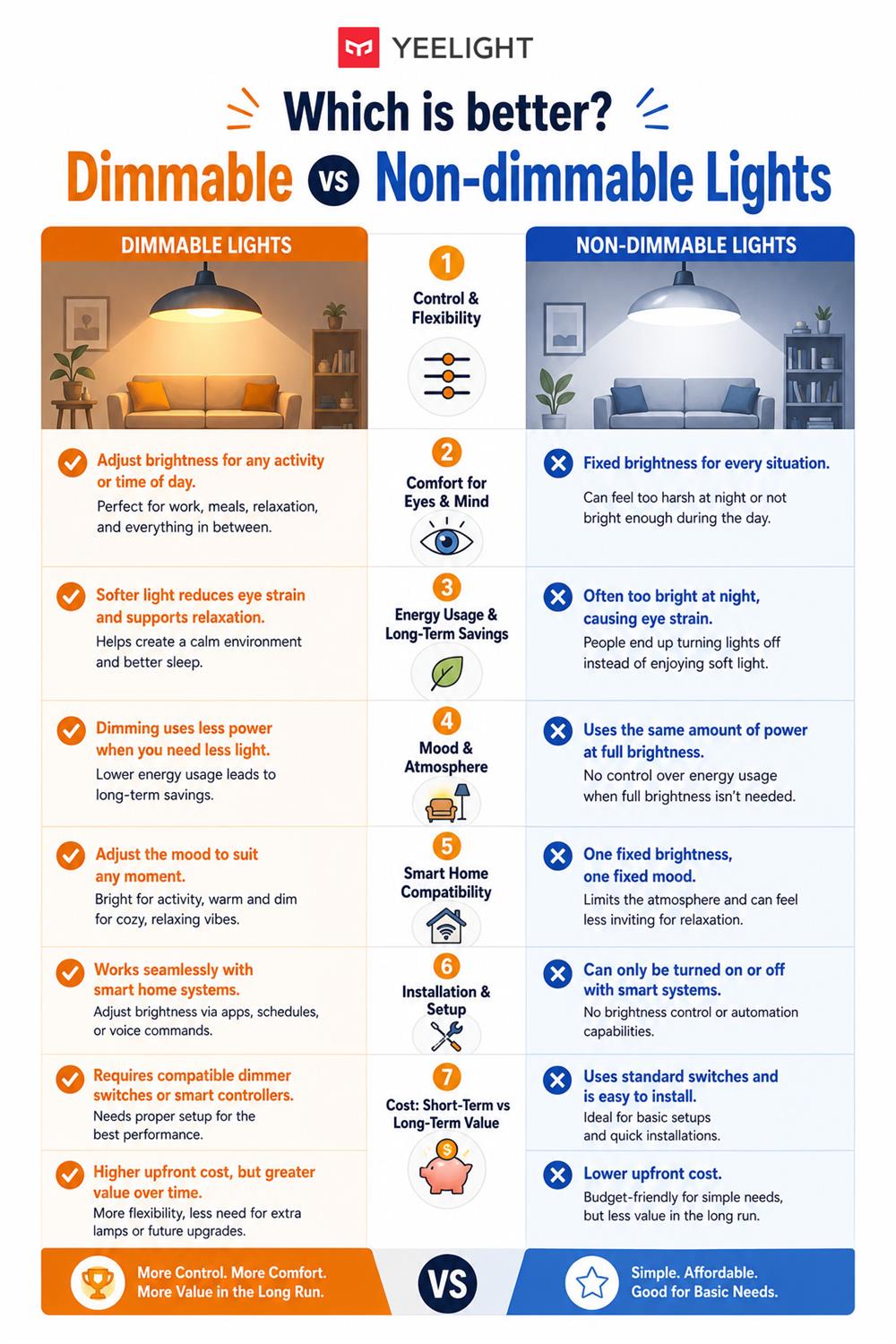
1. Control and Flexibility in Daily Life

Dimmable lights allow you to adjust brightness based on what you are doing. Bright light is helpful when cleaning or working, while softer light is best being set when having a meal or before sleeping. This flexibility makes a space work for a lot of different activities without changing fixtures. In contrast, non-dimmable lights stay at one fixed brightness. They work well in areas where lighting does not change, such as storage rooms. However, in living rooms, without dimmable lights, they can feel harsh at night. It is more natural if the lights are bright during the day and dimmed at night.


2. Comfort for the Eyes and Mind

Lighting directly affects eye comfort and mood. Bright lighting for long periods can cause eye strain, or restlessness, especially at night. Dimmable lights help reduce glare by allowing softer light levels when needed. In bedrooms, dimmed lighting before sleep signals the body to relax, making it easier to wind down after a long day. Non-dimmable lights often feel too strong during nighttime use, leading people to turn lights off completely instead of enjoying gentle illumination. A softly lit room helps the body feel safe and settled, especially in the evening hours.


3. Energy Usage and Long-Term Savings

Many people like to think that dimmable lights use more electricity. However, dimming actually reduces power usage when lights are set to lower brightness. Over time, this will lead to significant energy savings. Non-dimmable lights consume the same amount of power when they are switched on. While they may cost less, they do not offer any control over energy usage if you just need dimmed lights. For households where lights stay on for a long time at night, reducing brightness when bright light is not needed helps lower electricity bills.


4. Mood and Atmosphere 

Lighting plays a huge role in how a space feels. Dimmable lights allow you to change the mood without changing your furniture or decorations. A bright room feels active and suitable for socializing, while warm and dimmed lighting feels cozy and relaxing. Non-dimmable lights are practical but limited as they only create one mood. This works fine in functional areas but can ruin the mood in spaces meant for relaxation. For instance, a dining area feels very different when light is dimmed compared to the same brightness used for tasks.


5. Compatibility with Modern Smart Homes

Dimmable lights integrates seamlessly into smart home systems. When combined with smart controls, users have the ability to modify the brightness through apps, schedules, or voice commands. This creates a smooth experience where lighting adjusts automatically to fit daily routines. Non-dimmable lights can still be controlled via a smart home system for turning them on and off, but they do not have brightness adjustment and automation, which makes them limited. Therefore, for families gradually transitioning to a smarter lifestyle, dimmable lighting provides greater future adaptability without the need to change fixtures later on.


6. Installation and Setup Considerations

Non-dimmable lights use standard switches and are easy to install, making them ideal for basic setups or quick swaps. On the other hand, dimmable lights need compatible dimmer switches or smart controllers, such as apps or remotes. Using an incompatible switch can lead to functionality issues. Therefore, careful planning is essential for optimal performance. A properly installed dimmable light can function as expected, but a faulty setup may lead to annoyance. This highlights the importance of understanding compatibility prior to installation.


7. Cost: Short-Term vs Long-Term Value

Non-dimmable lights usually cost less at the beginning. This makes them an easy pick for tight budgets or areas where lighting needs are simple. Dimmable lights cost more upfront but offer better value over time. Their flexibility reduces the need for additional lamps to set different moods or future upgrades. Those who have a home that is growing with changing needs, such as the needs for working from home or lifestyle upgrades will benefit more from dimmable lighting rather than non-dimmable ones.


Thus, there is no best option, but only the right choice for your needs. Non-dimmable lights are reliable and affordable for areas with simple needs such as utility areas. Dimmable lights offer flexibility, energy efficiency, and emotional warmth that many modern homes need. For most living spaces, such as living rooms and bedrooms, dimmable lighting creates a better mood.

Want to upgrade your home lighting that has adjustable brightness to suit your daily lifestyle? Get a free lighting proposal plan by scheduling a visit to the Copper Connect showroom! Our lighting experts will guide you in designing the perfect smart lighting setup that fits your home perfectly.
The Impact of Desk Lamp Lighting on Productivity

The Impact of Desk Lamp Lighting on Productivity

Many people think productivity depends on motivation or discipline. Few realise that something as simple as a desk lamp can shape how well we work every day. If you have ever felt tired faster than expected or lost focus during late-night work, lighting may be part of the reason. Desk lighting does more than help us see. It affects our eyes, mood, focus, and even how long we can work without feeling drained. In today’s world, where many Malaysians work from home, study at night, desk lamp lighting is now a part of a healthy and productive lifestyle.


So, why does it matter? Productivity is not about working longer hours. It is about working smarter. Poor lighting can reduce efficiency and increase eye strain without people realising the cause. Over time, this affects work quality and learning ability. In Malaysia, many homes and offices rely on general ceiling lights that are not designed for focused tasks. Desk lamps fill this gap by providing targeted light where it is needed most. Understanding how to use desk lighting correctly helps people stay focused longer, and protect their eyes in the long run.


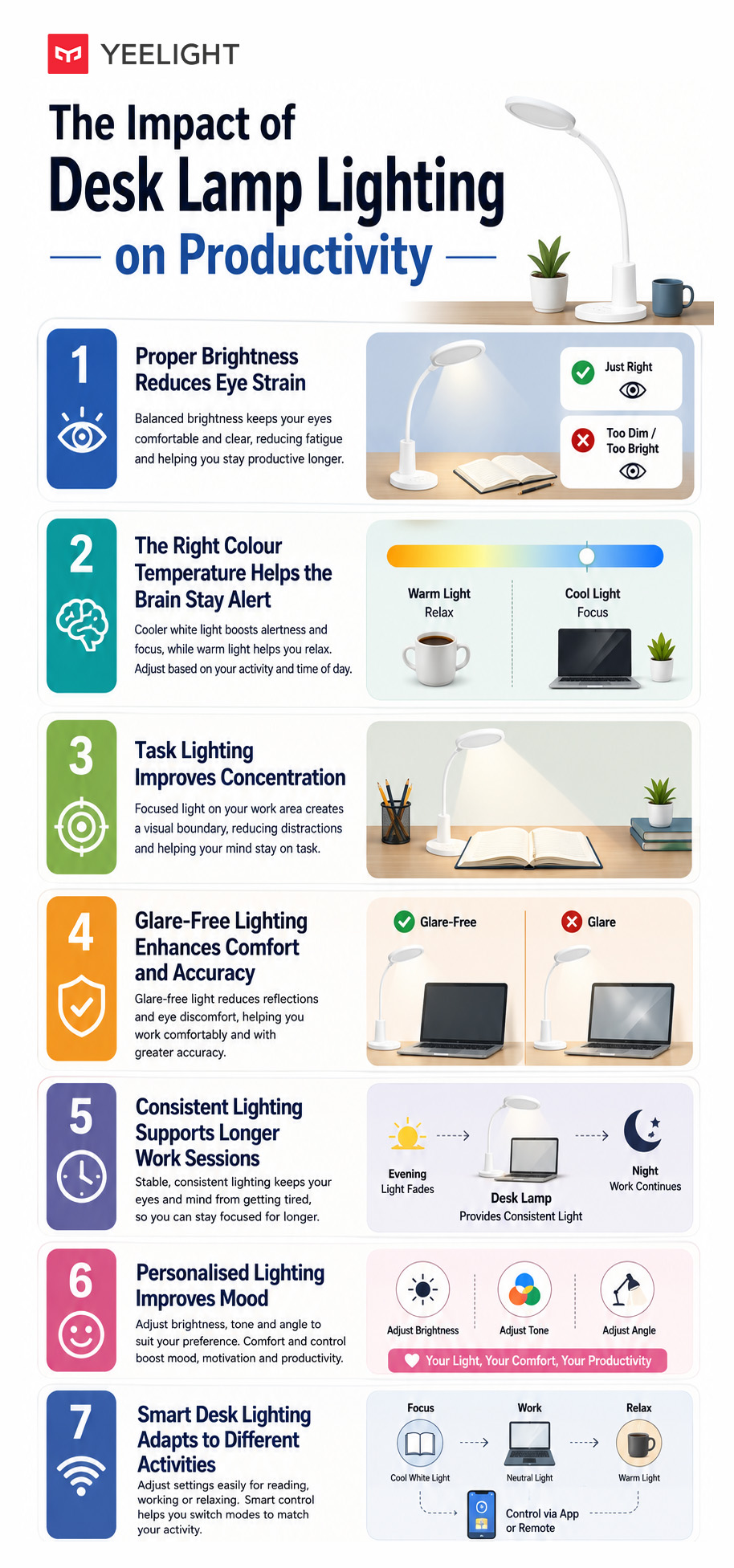
1. Proper Brightness Reduces Eye Strain

Brightness is one of the most important factors in desk lamp lighting. A lamp that is too dim forces the eyes to work harder, while one that is too bright can cause discomfort. Both lead to faster eye fatigue. Imagine reading or typing reports under a weak desk lamp. The eyes will constantly adjust between the brightness of your environment and screen, causing tiredness within a short time. On the other hand, balanced brightness allows text and objects to appear clear without effort. Over time, this reduces eye strain and supports steady productivity throughout the day or night.


2. The Right Colour Temperature Helps the Brain Stay Alert

Light colour affects how the brain reacts. Warm light allows us to relax, while cooler light encourages focus. This is why desk lamp colour plays a role in productivity. When working, cooler white light helps the brain stay engaged. It feels similar to natural daylight and supports tasks like writing, studying, or detailed work. In contrast, using warm light for focused tasks can make people feel sleepy too quickly. A desk lamp with adjustable colour temperature allows users to switch between modes based on their activity, and adjust to different times of the day to suit their needs, whether to focus, or winding down.


3. Task Lighting Improves Concentration 

Desk lamps are designed to light specific areas, unlike ceiling lights that spread light across the room. Task lighting helps the brain pay attention to the task in front of it. When light is focused directly onto a keyboard, notebook, or drawing area, it creates a visual boundary between work and surroundings. This makes it easier to concentrate, especially in shared spaces. For example, a student studying at a shared table can stay focused when the desk lamp highlights only their books clearly. The surrounding area becomes less visually demanding, helping the mind stay on task. 


4. Glare-Free Lighting Enhances Comfort and Accuracy

Glare is one of the most common problems in desk lighting. It happens when light reflects directly into the eyes or bounces off glossy surfaces like notebooks, tablets, or desks. This makes the eyes uncomfortable and forces the brain to work harder to see clearly. Think about working late at night with a desk lamp that shines straight onto your laptop screen. The reflection makes the screen harder to read, so you lean closer without realising it. A glare-free desk lamp spreads light softly across the workspace instead of bouncing it back into your eyes. This keeps posture natural, reduces strain, and helps work stay comfortable for longer periods.


5. Consistent Lighting Supports Longer Work Sessions

Inconsistent lighting conditions can confuse the eyes and brain. When lighting is inconsistent, people feel tired faster. Thus, desk lamps help maintain stable lighting at the work area, even when room lighting changes. For example, in the evening, natural light fades quickly. A desk light keeps the workspace evenly lit, allowing work to continue comfortably. This consistency supports longer and more productive sessions. People can maintain focus without constantly adjusting to light changes, which keeps energy levels steady.


6. Personalised Lighting Improves Mood

Everyone responds to light differently. Some prefer brighter environments, while others feel more comfortable with softer lighting. Desk lamps like the Yeelight Desk Lamp Z1 Pro and Pura Reading Desk Lamp allow personal control, which plays a role in mood. Being able to adjust brightness, light tone and light angle gives users a sense of comfort and ownership over their workspace. This small control can improve emotional well-being, especially during long workdays. When people enjoy their environment, they feel more motivated and over time, this positive feeling improves daily productivity naturally.


7. Smart Desk Lighting Adapts to Different Activities

Nowadays, many people switch between tasks throughout the day that require desk lamps. Thus, smart desk lamps are designed to adapt to these changes easily. Features like adjustable brightness and colour temperature control help users move smoothly between reading, computer work, and relaxing. Some lighting setups even allow control through apps or remotes. For example, switching from focused white light to a softer tone during short breaks helps the eyes rest without leaving the desk. 


Desk lamp lighting may seem like a small detail, but its impact on productivity is powerful. The right lighting supports focus and emotional well-being. It helps people work longer, make fewer mistakes, and feel less tired at the end of the day.

Want to upgrade your home lighting that supports your daily lifestyle? Get a free lighting proposal plan by scheduling a visit to the Copper Connect showroom! Our lighting experts will guide you in designing the perfect smart lighting setup that fits your home perfectly.

How Malaysians Are Using Smart Lighting to Redesign Their Homes

How Malaysians Are Using Smart Lighting to Redesign Their Homes

Walk into a modern Malaysian home today, and you may notice something different. The lights do not just turn on and off anymore. They dim gently in the evening, shift to cooler tones during work hours, and softly guide people at night without waking the whole house. Lighting has now become part of how homes feel and support daily life. More Malaysians are now rethinking how lighting fits into their homes. Instead of changing furniture or knocking down walls, they are using smart lighting to redesign spaces in a smarter, simpler way. 

So, why does it matter? Malaysians spend more time at home than before. Homes are now places to work, study, relax, entertain, and rest. One single lighting can no longer support all these activities well. Bright white lights may help with focus, but they can feel harsh at night. Warm lights feel cozy, but they are not always suitable for productive tasks. Thus, smart lighting solves this problem by allowing lighting change with mood and activity. It helps homes feel more comfortable without major renovation. 


1. Turning Living Rooms into Multi-Purpose Spaces

Living rooms in Malaysian homes often serve many roles. During the day, they are bright and active. At night, they become a place to watch shows or spend time with family. Smart lighting allows one room to adapt easily without changing fixtures. Many homeowners use smart ceiling lights with adjustable brightness and color temperature so that in the afternoon, the light stays bright and neutral for daily activities. While in the evening, it shifts to warmer tones with lower brightness, making the room feel calmer. Some add ambient lights behind shelves or TVs to reduce eye strain and create depth.


2. Creating Better Sleep with Smarter Bedroom Lighting

Sleep quality is a growing concern for many Malaysians. Bright harsh lighting at night can disturb the body’s natural sleep rhythm, making sleep difficult. Thus, smart lighting helps create a healthier bedtime routine. In bedrooms, many people use warm, dimmable lights that slowly fade at night. Instead of switching off lights suddenly, the lighting gently reduces brightness, helping the body relax. While in the morning, lights can slowly brighten to mimic sunrise, making it easier to wake up. Some homes also use motion-activated night lights that turn on softly when someone gets up at night. 


3. Making Home Offices More Productive

With more Malaysians working or studying from home, lighting plays a big role in comfort and focus. Poor lighting can cause eye strain and tiredness. Smart lighting allows home offices to use brighter light during work hours to help people stay alert and focused. When work ends, the same lights can be changed to warmer tones, helping the mind switch off. Some homeowners also use smart desk lights or monitor light bars that reduce glare on screens that have adjustable brightness and color temperature. This small change makes work more comfortable.


4. Improving Kitchen Safety and Daily Convenience

The kitchen is one of the most active spaces in a Malaysian home. Good lighting is important for safety and cleanliness. Thus, smart lighting adds an extra layer of convenience. Many homes use brighter lighting for food preparation areas. For instance, motion sensor under-cabinet lights provide focused light without shadows. These lights can turn on automatically when someone enters the kitchen. This makes quick trips to the kitchen safer and more comfortable at night, especially for families with children or elderly members.


5. Using Lighting to Make Small Homes Feel Bigger

Many Malaysian homes, especially apartments, have limited space. Smart lighting helps make these spaces feel more open and less crowded. Instead of relying on one strong ceiling light, homeowners use layers of light. Soft wall lighting and indirect lighting help spread light evenly. This reduces harsh shadows and makes rooms feel wider. Smart controls allow different lighting zones within the same room. A dining area can feel warm and cozy, while a nearby study corner stays brighter. This visual separation helps small homes feel more organized and spacious.


6. Enhancing Home Safety with Smart Lighting Automation

Safety is another reason Malaysians are turning to smart lighting. Automated lighting can help prevent accidents and add peace of mind. Motion sensor lights are commonly used in hallways, staircases, and bathrooms. They turn on only when needed, reducing the risk of trips or falls at night. Outdoor lights can also turn on automatically when movement is detected, adding an extra sense of security. Some homeowners schedule lights to turn on and off when they are not at home. This makes the house look occupied and adds protection.


7. Personalising Homes with Lighting Scenes and Routines

One of the biggest reasons smart lighting feels special is personalisation. Malaysians enjoy creating lighting scenes that match their lifestyle. A single tap can switch the home into “movie mode” with dim lights and soft backlighting. Another scene may be set for family dinners with warm  lighting. Morning routines can bring bright, energising light to start the day right. These small changes make daily life smoother and more enjoyable. Lighting becomes something that supports habits instead of something people have to think about.


Smart lighting is changing how Malaysians experience their homes. It improves comfort, increases safety, and adds flexibility to everyday living. More importantly, it does all this without major renovation or complicated changes.

Want to upgrade your home lighting that supports your daily lifestyle? Get a free lighting proposal plan by scheduling a visit to the Copper Connect showroom! Our lighting experts will guide you in designing the perfect smart lighting setup that fits your home perfectly.