Close
You have no items in your shopping cart.
Search
RSS

Blog posts tagged with 'dimming lights'

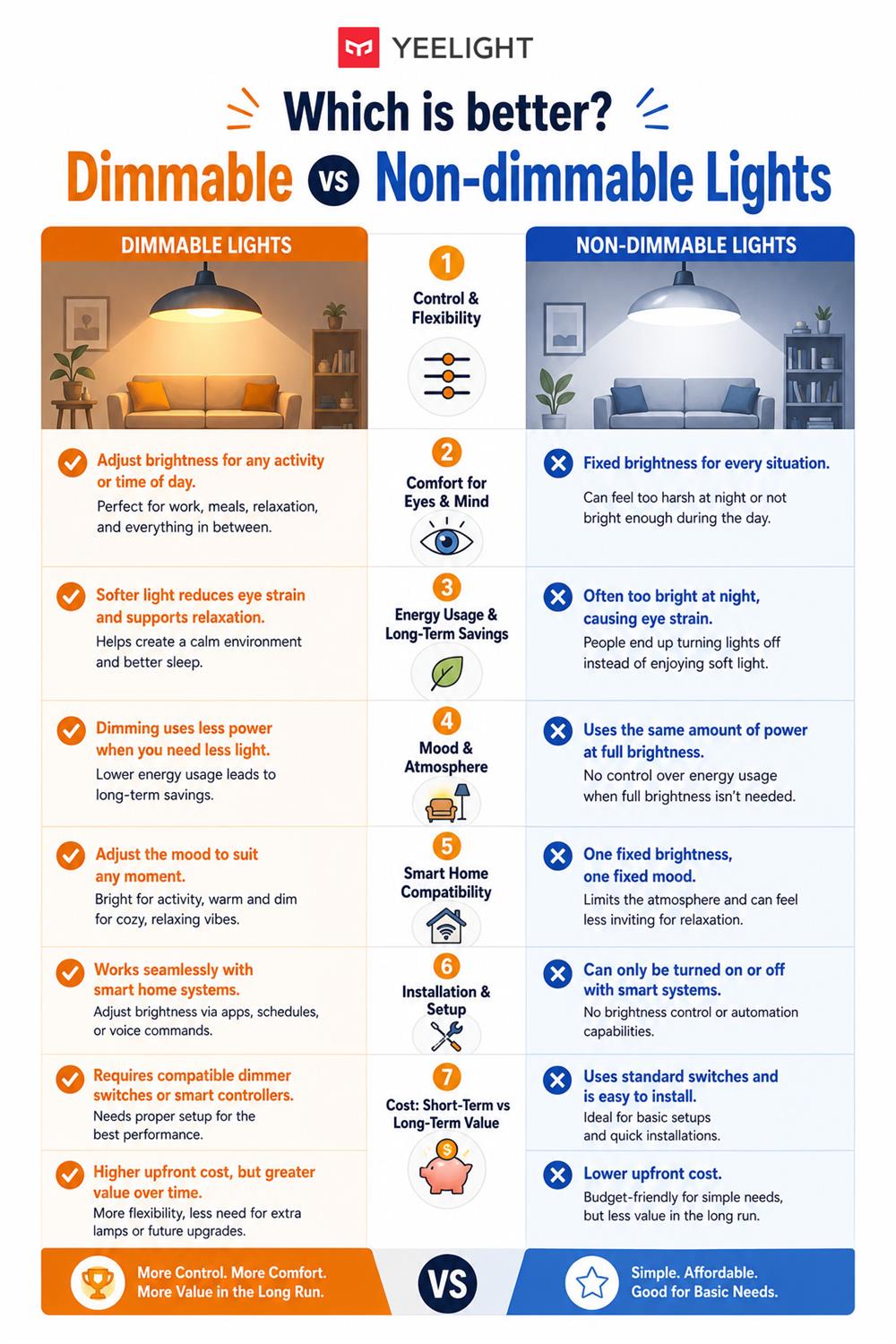
Which is better? Dimmable vs Non-dimmable Lights

Which is better? Dimmable vs non-dimmable Lights

Have you ever walked into a room and felt that the light was too bright or too dull? Lighting does more than help us see. It also affects how we rest, concentrate, and feel safe at home. Yet, many homeowners still choose lights based on price or just looks. One of the most common questions people should be asking when picking lighting for their homes is if they should get dimmable or non-dimmable lights. Well, the answer depends on how each space of your home is used.

So, why does it matter? Lighting is often installed once and forgotten for years. Choosing the wrong type can lead to daily discomfort or regret when your space doesn’t feel flexible enough when you need to dim the lights for a different situation. In homes where lights are used throughout the day and night, lighting needs to adapt to many activities, such as work and family time. Understanding the difference between dimmable and non-dimmable lights helps homeowners save money and create rooms that are flexible.


1. Control and Flexibility in Daily Life

Dimmable lights allow you to adjust brightness based on what you are doing. Bright light is helpful when cleaning or working, while softer light is best being set when having a meal or before sleeping. This flexibility makes a space work for a lot of different activities without changing fixtures. In contrast, non-dimmable lights stay at one fixed brightness. They work well in areas where lighting does not change, such as storage rooms. However, in living rooms, without dimmable lights, they can feel harsh at night. It is more natural if the lights are bright during the day and dimmed at night.


2. Comfort for the Eyes and Mind

Lighting directly affects eye comfort and mood. Bright lighting for long periods can cause eye strain, or restlessness, especially at night. Dimmable lights help reduce glare by allowing softer light levels when needed. In bedrooms, dimmed lighting before sleep signals the body to relax, making it easier to wind down after a long day. Non-dimmable lights often feel too strong during nighttime use, leading people to turn lights off completely instead of enjoying gentle illumination. A softly lit room helps the body feel safe and settled, especially in the evening hours.


3. Energy Usage and Long-Term Savings

Many people like to think that dimmable lights use more electricity. However, dimming actually reduces power usage when lights are set to lower brightness. Over time, this will lead to significant energy savings. Non-dimmable lights consume the same amount of power when they are switched on. While they may cost less, they do not offer any control over energy usage if you just need dimmed lights. For households where lights stay on for a long time at night, reducing brightness when bright light is not needed helps lower electricity bills.


4. Mood and Atmosphere 

Lighting plays a huge role in how a space feels. Dimmable lights allow you to change the mood without changing your furniture or decorations. A bright room feels active and suitable for socializing, while warm and dimmed lighting feels cozy and relaxing. Non-dimmable lights are practical but limited as they only create one mood. This works fine in functional areas but can ruin the mood in spaces meant for relaxation. For instance, a dining area feels very different when light is dimmed compared to the same brightness used for tasks.


5. Compatibility with Modern Smart Homes

Dimmable lights integrates seamlessly into smart home systems. When combined with smart controls, users have the ability to modify the brightness through apps, schedules, or voice commands. This creates a smooth experience where lighting adjusts automatically to fit daily routines. Non-dimmable lights can still be controlled via a smart home system for turning them on and off, but they do not have brightness adjustment and automation, which makes them limited. Therefore, for families gradually transitioning to a smarter lifestyle, dimmable lighting provides greater future adaptability without the need to change fixtures later on.


6. Installation and Setup Considerations

Non-dimmable lights use standard switches and are easy to install, making them ideal for basic setups or quick swaps. On the other hand, dimmable lights need compatible dimmer switches or smart controllers, such as apps or remotes. Using an incompatible switch can lead to functionality issues. Therefore, careful planning is essential for optimal performance. A properly installed dimmable light can function as expected, but a faulty setup may lead to annoyance. This highlights the importance of understanding compatibility prior to installation.


7. Cost: Short-Term vs Long-Term Value

Non-dimmable lights usually cost less at the beginning. This makes them an easy pick for tight budgets or areas where lighting needs are simple. Dimmable lights cost more upfront but offer better value over time. Their flexibility reduces the need for additional lamps to set different moods or future upgrades. Those who have a home that is growing with changing needs, such as the needs for working from home or lifestyle upgrades will benefit more from dimmable lighting rather than non-dimmable ones.


Thus, there is no best option, but only the right choice for your needs. Non-dimmable lights are reliable and affordable for areas with simple needs such as utility areas. Dimmable lights offer flexibility, energy efficiency, and emotional warmth that many modern homes need. For most living spaces, such as living rooms and bedrooms, dimmable lighting creates a better mood.

Want to upgrade your home lighting that has adjustable brightness to suit your daily lifestyle? Get a free lighting proposal plan by scheduling a visit to the Copper Connect showroom! Our lighting experts will guide you in designing the perfect smart lighting setup that fits your home perfectly.
How Dimming Lights Can Transform Your Home Ambiance?

Lighting plays a significant role in setting the mood of a home. Whether you want a cozy, relaxing space or a bright, lively atmosphere, the right lighting can make all the difference. One of the best ways to control your home's ambience is by using dimmable lights. They give you flexibility, help you save energy, and can even improve your well-being. In this blog post, we’ll explore five ways dimming lights can transform your home.


1. Set the Mood for Any Occasion

Dimmable lights allow you to adjust brightness levels based on different activities. Imagine having a romantic dinner at home—you wouldn’t want harsh, bright lights ruining the atmosphere. Instead, dim the lights to create a warm and intimate setting. On the other hand, when hosting a party, you might want brighter lighting to keep the energy high. With dimmable lights, you can easily switch moods with just a touch.


2. Improve Sleep and Relaxation

Bright lights in the evening can interfere with your sleep cycle. Dimming the lights in the evening helps signal your body that it’s time to wind down. Soft, warm lighting creates a calming effect, making it easier for you to relax before bedtime. For example, using YEELIGHT Smart LED Bulbs, you can set a schedule to gradually dim the lights as bedtime approaches, improving your overall sleep quality.


3. Save Energy and Reduce Costs

Lowering your light’s brightness doesn’t just enhance ambience—it also helps save electricity. When you dim LED lights, they consume less energy, leading to lower electricity bills over time. For example, if you only need 50% brightness while watching TV, your light consumes less power compared to running at full brightness. YEELIGHT’s dimmable smart lighting solutions allow you to customize brightness levels while reducing energy waste.


4. Enhance Home Aesthetics

Lighting can make or break the visual appeal of your space. With dimmable lights, you can highlight different design elements in your home. For example, dimming the lights in your living room while keeping accent lighting on your bookshelves or artwork creates a sophisticated and stylish look. Many homeowners use YEELIGHT LED Lightstrips and YEELIGHT Arwen Ceiling Lights to add depth and character to their home’s design.


5. Increase Focus and Productivity

Not all activities require the same level of brightness. While working or reading, you need bright lighting to maintain focus and reduce eye strain. However, when winding down in the evening, softer lighting helps you relax. Smart dimmable lights allow you to switch between bright task lighting during work hours and a more soothing glow in the evening, helping you stay productive while maintaining a comfortable environment.


In conclusion, dimmable lights offer more than just convenience—they completely transform the way you experience your home. From setting the perfect mood to saving energy, improving sleep, and enhancing aesthetics, adjustable lighting is a smart choice for any home.

If you’re interested in upgrading your home with dimmable smart lighting, schedule a visit to our Copper Connect showroom for a free consultation and discover the perfect lighting solution for your space!

5 Emotional Benefits of Dimming Lights: From Stress Relief to Comfort

Finding ways to unwind and create a calming environment is essential for maintaining our well-being. One of the simplest yet most impactful ways to shape a cozy and inviting atmosphere is by dimming the lights. While this may seem like a small change, adjusting light levels can have powerful effects on our emotional health. So, let’s explore the five emotional benefits of dimming lights and how this simple twist can transform your home into a haven of peace and comfort.

Why Does It Matter?

Lighting can significantly affect our mood, stress levels, and overall mental health. Bright, intense lighting is great for tasks that require focus, but it’s not always ideal for moments of relaxation. With dimming lights, you can create an atmosphere that matches your mood, ultimately supporting your emotional well-being. Let’s take a closer look at how this works.


1. Stress Relief

One of the most notable emotional benefits of dimming lights is its ability to reduce stress. When exposed to harsh or bright lighting, our bodies tend to stay on high alert, which can raise stress levels. Dimming the lights signals the brain to relax, triggering a natural state of calm. Imagine coming home after a long day, dimming the lights in your living room, and instantly feeling the tension melt away. This simple adjustment can create a calming atmosphere that encourages stress relief and relaxation.

2. Enhanced Comfort

Dim lighting is an excellent way to enhance feelings of comfort. Bright lights can sometimes feel harsh and over-stimulating, while softer lighting fosters a warm, welcoming environment. For example, think of the cozy feeling you get when you’re curled up with a book, wrapped in a blanket, with soft, dimmed lights around you. This kind of lighting helps create an inviting and comforting atmosphere, perfect for winding down in the evening or sharing intimate moments with loved ones.

3. Better Sleep Preparation

As the day draws to a close, dimming the lights helps prepare your body for sleep. Bright lights can suppress melatonin, the hormone that regulates sleep, making it harder for you to fall asleep. Dimming the lights in the evening mimics the natural setting of the sun and signals to your brain that it’s time to start winding down. You can gradually reduce light intensity in your bedroom as you prepare for bed, helping to ensure a peaceful and restful night’s sleep.

4. Mood Enhancement

Dimming lights can also boost your mood by creating a more soothing and enjoyable environment. Adjusting the light levels to a warmer, softer glow can lift your spirits and provide a sense of tranquility. For instance, dimmed lights during dinner can make the experience feel more special and intimate, enhancing the overall ambiance. This adjustment allows you to set the right tone for various moments, whether you’re entertaining guests or simply enjoying a quiet evening at home.

5. Improved Focus and Mindfulness

While bright lights are often associated with productivity, dimming lights can also improve focus, especially regarding mindfulness activities like meditation or yoga. Soft lighting encourages a slower pace, allowing you to center your thoughts and concentrate on the present moment. For example, if you’re practicing yoga or meditating, dimming the lights can help create a space that feels peaceful and free of distractions, supporting a deeper state of mindfulness.


In conclusion, dimming lights is more than just an aesthetic choice; it’s a way to influence your mood, reduce stress, and improve your overall emotional well-being. By taking control of your environment and adjusting the lighting to suit your needs, you can create a home that truly feels like a sanctuary. With Yeelight Pro, you can fulfill all the lighting requirements and create an environment that adapts to your mood, enhances relaxation, and supports your well-being. So next time you feel the weight of a busy day, remember that dimming the lights with Yeelight Pro can be a simple yet effective way to nurture your mental health.

Interested in learning more about how dimmable lights can transform your space? 

Visit the Yeelight Pro page for details on our latest lighting solutions, or schedule a free consultation at our Copper Connect showroom to explore the best options for your home.