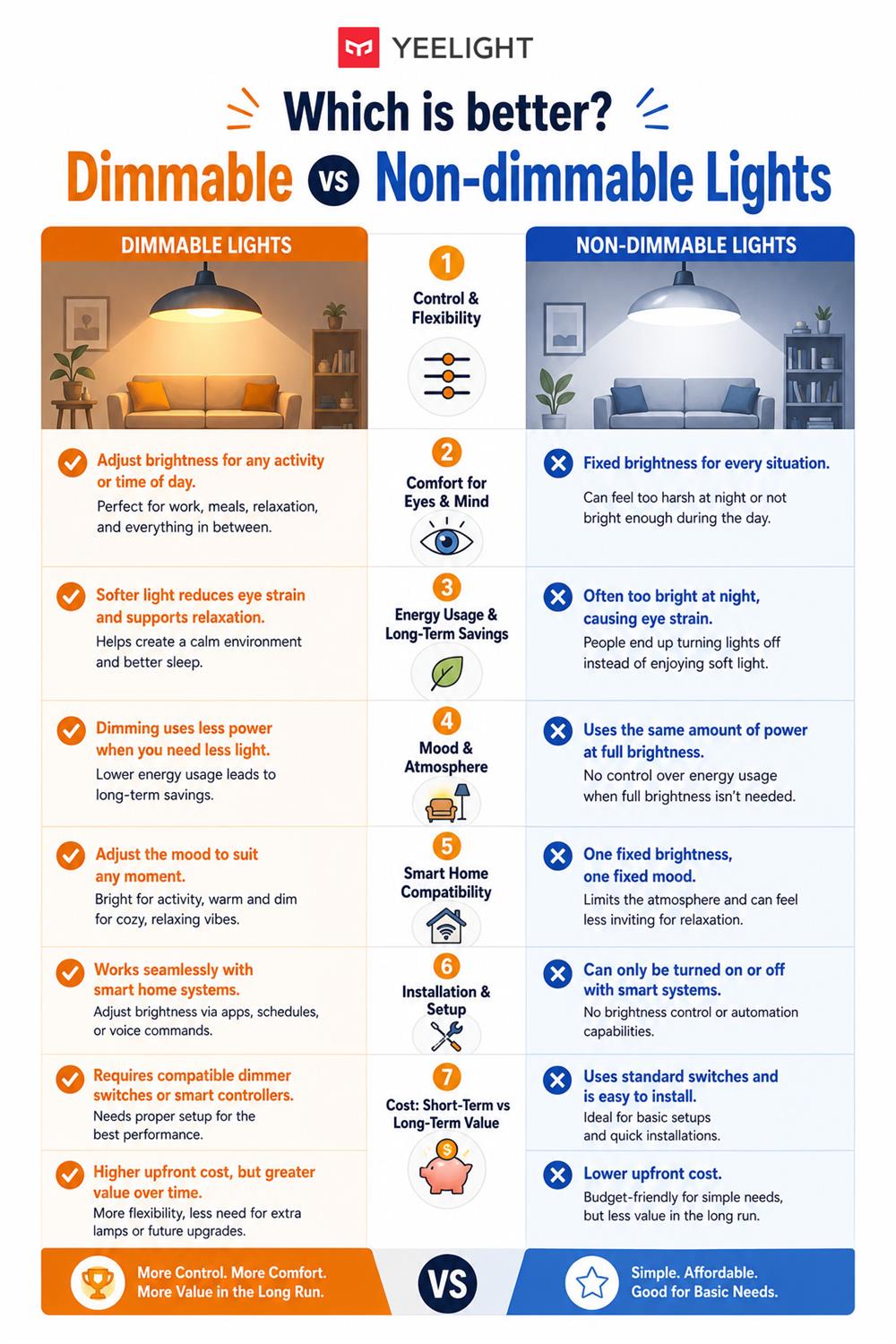
Have you ever walked into a room and felt that the light was too bright or too dull? Lighting does more than help us see. It also affects how we rest, concentrate, and feel safe at home. Yet, many homeowners still choose lights based on price or just looks. One of the most common questions people should be asking when picking lighting for their homes is if they should get dimmable or non-dimmable lights. Well, the answer depends on how each space of your home is used.
So, why does it matter? Lighting is often installed once and forgotten for years. Choosing the wrong type can lead to daily discomfort or regret when your space doesn’t feel flexible enough when you need to dim the lights for a different situation. In homes where lights are used throughout the day and night, lighting needs to adapt to many activities, such as work and family time. Understanding the difference between dimmable and non-dimmable lights helps homeowners save money and create rooms that are flexible.
1. Control and Flexibility in Daily Life
Dimmable lights allow you to adjust brightness based on what you are doing. Bright light is helpful when cleaning or working, while softer light is best being set when having a meal or before sleeping. This flexibility makes a space work for a lot of different activities without changing fixtures. In contrast, non-dimmable lights stay at one fixed brightness. They work well in areas where lighting does not change, such as storage rooms. However, in living rooms, without dimmable lights, they can feel harsh at night. It is more natural if the lights are bright during the day and dimmed at night.
2. Comfort for the Eyes and Mind
Lighting directly affects eye comfort and mood. Bright lighting for long periods can cause eye strain, or restlessness, especially at night. Dimmable lights help reduce glare by allowing softer light levels when needed. In bedrooms, dimmed lighting before sleep signals the body to relax, making it easier to wind down after a long day. Non-dimmable lights often feel too strong during nighttime use, leading people to turn lights off completely instead of enjoying gentle illumination. A softly lit room helps the body feel safe and settled, especially in the evening hours.
3. Energy Usage and Long-Term Savings
Many people like to think that dimmable lights use more electricity. However, dimming actually reduces power usage when lights are set to lower brightness. Over time, this will lead to significant energy savings. Non-dimmable lights consume the same amount of power when they are switched on. While they may cost less, they do not offer any control over energy usage if you just need dimmed lights. For households where lights stay on for a long time at night, reducing brightness when bright light is not needed helps lower electricity bills.
4. Mood and Atmosphere
Lighting plays a huge role in how a space feels. Dimmable lights allow you to change the mood without changing your furniture or decorations. A bright room feels active and suitable for socializing, while warm and dimmed lighting feels cozy and relaxing. Non-dimmable lights are practical but limited as they only create one mood. This works fine in functional areas but can ruin the mood in spaces meant for relaxation. For instance, a dining area feels very different when light is dimmed compared to the same brightness used for tasks.
5. Compatibility with Modern Smart Homes
Dimmable lights integrates seamlessly into smart home systems. When combined with smart controls, users have the ability to modify the brightness through apps, schedules, or voice commands. This creates a smooth experience where lighting adjusts automatically to fit daily routines. Non-dimmable lights can still be controlled via a smart home system for turning them on and off, but they do not have brightness adjustment and automation, which makes them limited. Therefore, for families gradually transitioning to a smarter lifestyle, dimmable lighting provides greater future adaptability without the need to change fixtures later on.
6. Installation and Setup Considerations
Non-dimmable lights use standard switches and are easy to install, making them ideal for basic setups or quick swaps. On the other hand, dimmable lights need compatible dimmer switches or smart controllers, such as apps or remotes. Using an incompatible switch can lead to functionality issues. Therefore, careful planning is essential for optimal performance. A properly installed dimmable light can function as expected, but a faulty setup may lead to annoyance. This highlights the importance of understanding compatibility prior to installation.
7. Cost: Short-Term vs Long-Term Value
Non-dimmable lights usually cost less at the beginning. This makes them an easy pick for tight budgets or areas where lighting needs are simple. Dimmable lights cost more upfront but offer better value over time. Their flexibility reduces the need for additional lamps to set different moods or future upgrades. Those who have a home that is growing with changing needs, such as the needs for working from home or lifestyle upgrades will benefit more from dimmable lighting rather than non-dimmable ones.
Thus, there is no best option, but only the right choice for your needs. Non-dimmable lights are reliable and affordable for areas with simple needs such as utility areas. Dimmable lights offer flexibility, energy efficiency, and emotional warmth that many modern homes need. For most living spaces, such as living rooms and bedrooms, dimmable lighting creates a better mood.
Want to upgrade your home lighting that has adjustable brightness to suit your daily lifestyle? Get a free lighting proposal plan by scheduling a visit to the Copper Connect showroom! Our lighting experts will guide you in designing the perfect smart lighting setup that fits your home perfectly.