Close
You have no items in your shopping cart.
Search
RSS

Blog posts tagged with 'bedroom lighting'

How to Design Smart Lighting for Bedrooms for Better Sleep

How to Design Smart Lighting for Bedrooms for Better Sleep

How to Design Smart Lighting for Bedrooms for Better Sleep

With smart lighting, your bedroom can improve your sleep by changing your lights into warm and dim lighting in the evening, while cooler lighting is used when you do work to stay productive. With smart lighting, you can automate your lighting using schedules, scenes and voice control to have better sleeping habits.


1. How does smart lighting improve sleep?

Smart lighting has the feature to reduce the brightness of lights gradually and change to warm lights before sleeping time. It can be scheduled at a specific time to signal your brain that it is time to sleep, while supporting your natural sleep cycle.


2. What colour light is best for sleeping?

The best lighting colour for sleep is warm lighting, which is around 3000K or lower. It creates a cozy atmosphere in the bedroom that helps the body to relax and rest compared to white lighting.


3. Should I keep my bedroom lights dim at night?

Definitely. Dimmed lights don't strain the eyes and help us to sleep more easily. Using bright white lights before sleeping can make sleeping difficult as they signal your brain to be productive.


4. Can smart lights turn off automatically?

Yes. One of smart lighting’s features is that it can schedule your lights to do different things such as switching off and on the lights, dimming and brightening the lights, and even changing the lighting colours once scheduled.


5. Is smart lighting suitable for Malaysian homes?

Yes. A lot of houses in Malaysia have interior layouts that prevent natural lighting from entering the whole home, or tall buildings that block the sunlights. Thus, smart lighting can brighten the home without the lights straining the eyes by dimming them to a comfortable brightness.


6. Do I need to renovate my bedroom?

Not necessarily. Some smart lights can be plug-and-play, such as smart bulbs and smart light strips, making installing them easy and quick with no renovation and rewiring.


Using Smart Lighting in Bedrooms

With Malaysia’s warm climate, lots of homeowners prefer spending a lot of time indoors with closed curtains to keep the space cool. This affects the amount of natural sunlight from entering the bedroom. Nowadays, a lot of Malaysians also work from home and relax in bedrooms, thus having smart lighting that is flexible makes the bedroom more comfortable.

Why Smart Lighting in the Bedroom Matters

  • Inconsistent natural light: Smart lighting allows the room to have enough brightness to remain functional such as working, even when sunlight is blocked by other buildings or curtains.
  • Using phones before sleeping: Warm lighting in the bedroom creates a relaxing mood in the bedroom when using your phone or reading to avoid eye strain.
  • Air-conditioned bedrooms: Using dimmed warm lighting suits a cozy bedroom better than white lighting. They create a relaxing atmosphere like a hotel room instead of feeling like an office.

Real-Life Use Cases

  • A gradual bedtime routine: Scheduling your bedroom lights to dim and slowly turn off 30 mins before bedtime creates a smooth transition and feels more natural.
  • Waking up naturally: Setting your smart lights to brighten when waking up makes it more comfortable than waking up in complete darkness when your alarm goes off.
  • Bedtime scenes: Homeowners can adjust all of their lighting to dim or turn off in the bedroom in one tap by creating a ‘Good Night’ scene. This can also be activated by using a voice command when you are already in bed.

Tips & Best Practices

  • Use warm lighting in the evening: Using warm lighting for your bedroom in the evening creates a relaxing atmosphere that mimics the sunset, making it more suitable for resting.
  • Automate your daily schedule: Set your lights to automatically change brightness throughout the day. Automation means you never have to remember to adjust your lighting manually.

Common Mistakes To Avoid

  • Using bright white light all the time: Many people use white light throughout the day, however, it can make resting spaces like the living room and bedroom feel like an office, which prevents the body from getting the best rest.
  • Forgetting to adjust brightness: Brightness is also as important as colour temperature. If the warm lighting is too bright even when resting, it can strain the eyes and make the atmosphere uncomfortable.


The Yeelight Advantage

With a full smart lighting automation from Yeelight Pro, it allows homeowners to schedule brightness, customize colour temperature, automate routines, and control lighting remotely through a smartphone or voice assistant.

Yeelight Smart Lighting has become a leader in the Malaysian market because of its integration with Xiaomi Home, Google Home, and Apple HomeKit. Their "SLISAON" (Smart Light Is Always ON) ensures your smart scenes work even if someone flips the manual wall switch. 


Comparison: Smart Lighting vs Traditional Lighting 

Category

Traditional Lighting

Smart Lighting

Control

Turn on or off using a wall switch only.

Using a wall switch, smartphone app, voice assistant, or automation.

Brightness

Fixed brightness.

Easily adjust brightness anytime through the app or preset scenes.

Colour Temperature

Fixed to one colour temperature.

Switch between warm and cool white depending on the time of day or activity.

Automation

No scheduling or automatic adjustments.

Set schedules, bedtime routines, sunrise wake-up scenes, and timers.

Bedroom Experience

Provides basic illumination only.

Creates a personalised and relaxing atmosphere that supports winding down before sleep.


How to Get Started with Implementing Smart Lighting Ideas in Your Bedroom

1. List out your bedroom routine: From waking up until bedtime, list out how you use the bedroom. For instance, doing work in the morning, reading before sleeping or even watching TV. They will help you decide the right lighting setup.

2. Decide your ambient lighting first: You can slowly start with ambient lighting by installing a smart ceiling light. Adjustable brightness and color temperature can help create bright lighting during the day and warm lighting before bed time.

3. Set a bedtime schedule: Create a schedule in the smart light app that can dim the lights gradually and change to warm lights in the evening automatically. This creates a consistent bedtime routine without the need to adjust the lights every night.

4. Create Different Lighting Scenes: Create lighting scenes for different activities such as ‘Reading, ’Relaxing’ and ‘Movie Time’, so you do not need to change multiple lighting fixtures many times. Instead, you can change all of them in one tap for the activities you are doing.

5. Expand Your Smart Lighting System: Once comfortable and used to using smart lighting, expand them by adding light strips or even motion sensors to increase convenience more. You can slowly build your lighting system without any renovation.


Final Thoughts

Smart lighting in your bedroom isn’t just about making your room look pretty. It’s about creating an environment that supports better daily routines. Yeelight smart lighting helps homeowners to easily upgrade their bedrooms without complicated renovations, with adjustable brightness, colour temperature, automation and easy app control. 

Good lighting makes each moment more comfortable, whether you’re relaxing after work or starting a new day.


Ready to Upgrade Your Home?

Explore smart lighting solutions or get a Free Lighting Proposal Plan tailored to your home setup by scheduling a visit to the Copper Connect showroom! Our lighting experts will guide you in designing the perfect smart lighting setup that fits your home perfectly.

How to Arrange Lighting in a Bedroom?

How to Arrange Lighting in a Bedroom

When you close the door and draw your curtains each night, your bedroom should feel like your sanctuary. But imagine walking into a bedroom with harsh overhead glare, or one so dim that you fumble for the switch. Poor lighting can ruin the mood or even strain your eyes. That’s why arranging lighting in a bedroom is more than picking pretty lamps — it’s about creating a space that calms and adapts to your needs. With the right setup, especially with smart lights that let you control brightness and color at a tap, your bedroom can transform from ordinary into a cozy retreat that feels both stylish and practical.


So, why does this matter? Many people think “one ceiling light is enough,” but that’s a mistake. A bedroom is used for many activities, such as sleeping, reading and relaxing— and each needs a different light mood. In Malaysia’s climate and living conditions in people’s homes, lighting design must also consider energy efficiency, heat, and integration with smart home systems.


1. Layer Your Lighting — Ambient, Task, Accent

A single source of light won’t be enough for your bedroom, that’s why you need layers. You can start with ambient lighting for general brightness, task lighting for reading or dressing, and finally, accent lighting to create a mood. For example, a dimmable ceiling downlight can set the foundation, wall-mounted lights by the bed provide reading support, and a slim LED strip behind the headboard adds an inviting glow that completes the room. This balanced combination prevents your space from feeling flat and gives you the flexibility to match any activity or mood. When you use all three together, the bedroom feels richer, more comfortable, and more functional compared to relying on just one source.


2. Use Warm Color Temperatures for a Soothing Feel

In a bedroom, warm lights with a gentle yellowish glow are much more restful and calming compared to harsh cool white lighting. Cooler tones tend to feel too bright and clinical, which is why they are often better suited to offices or workspaces rather than a place meant for rest. That’s why many people prefer using smart bulbs that let you adjust the light from warm to cool, so they can enjoy a cozy glow at night and brighter light in the morning. With the right settings, your bedroom lighting can support both rest and productivity without ever feeling uncomfortable. Warm light also complements natural wooden furniture and soft fabrics, which are common in local homes, making the space even more inviting.


3. Dimming Is Essential to Create Mood

A static bright light is too rigid for a room meant for both rest and activity. Dimming gives you control over brightness and can transform the ambiance — whether you’re waking up, reading, or winding down. With smart lights that have app-based controls like the Yeelight app, you can fade the lights gently at night or brighten them slightly in the morning without the shock of full glare. This simple feature adds a layer of personalization, making your bedroom feel like it was designed exactly for your lifestyle. Over time, dimming also helps reduce electricity use, since you’re rarely running the lights at full power unnecessarily.


4. Place Task Lights Strategically 

Task lighting is most effective when it’s positioned to avoid shadows and glare. Instead of a bright lamp shining directly into your eyes, consider a bedside wall light angled toward the book or magazine you’re holding. If you have a wardrobe corner or dressing table, placing adjustable downlights angled inward ensures the area is illuminated clearly without yourself blocking the light. By thinking carefully about placement, you reduce strain and make everyday activities far more comfortable. They create convenience too, since smart lights allow you to brighten or dim only the area you need, instead of turning on the whole room.


5. Accent Lighting to Highlight Features and Add Depth

Accent lighting brings character to a room by drawing attention to textures, furniture, or décor. An LED strip behind a headboard can create a floating effect that instantly makes the room feel more luxurious. Others may highlight a textured wall panel, a piece of artwork, or even a tall indoor plant with a small spotlight. These details may feel subtle, but together they transform the bedroom into a visually rich and calming space. Accent lighting also gives you the chance to experiment with creativity, adding personality that reflects your style. It’s the finishing touch that often separates a plain room from one that feels thoughtfully designed.


6. Control Zones Independently

Not all lights should turn on or off together. Dividing your bedroom into lighting zones, such as ambient, bedside task, and accent — makes the space more functional. For instance, in the early morning, you can light up the dressing zone so the rest of the room stays calm. Independent control also helps save energy, since you only use what’s needed at the right time. With smart lighting systems, you can even group zones by routine, so one tap on your phone sets the entire bedroom to the mood you want. This flexibility means you’re always in charge of how the room feels, no matter the time of day.


7. Mind the Layout, Reflectors & Soft Surfaces

The placement of your lights and the materials in the room influence how comfortable the lighting feels. Avoid placing downlights too close to walls where they create harsh shadows, and use frosted covers or diffusers so bulbs don’t shine directly into your eyes. Light-coloured walls and ceilings help distribute brightness evenly, while curtains, carpets, and upholstered headboards soften reflections. When arranged thoughtfully, these elements work together to create an atmosphere that feels peaceful. Paying attention to surfaces ensures your lighting doesn’t just look good, but also feels gentle on the eyes. Even small adjustments, like shifting a lamp or adding a fabric shade, can greatly improve the comfort of your space.


Arranging bedroom lighting is both a science and an art, and it can be easily done with smart lights. When done well, it supports your routines, soothes your senses, and elevates your space from “just a room” to a restful sanctuary. 

Ready to see how smart lighting can transform your bedroom into something better? Get a free lighting plan and schedule a visit to the Copper Connect showroom! Our lighting expert will help you design an efficient lighting plan and show you how smart lights can make your dream bedroom glow together.


How to Arrange Lighting in a Bedroom

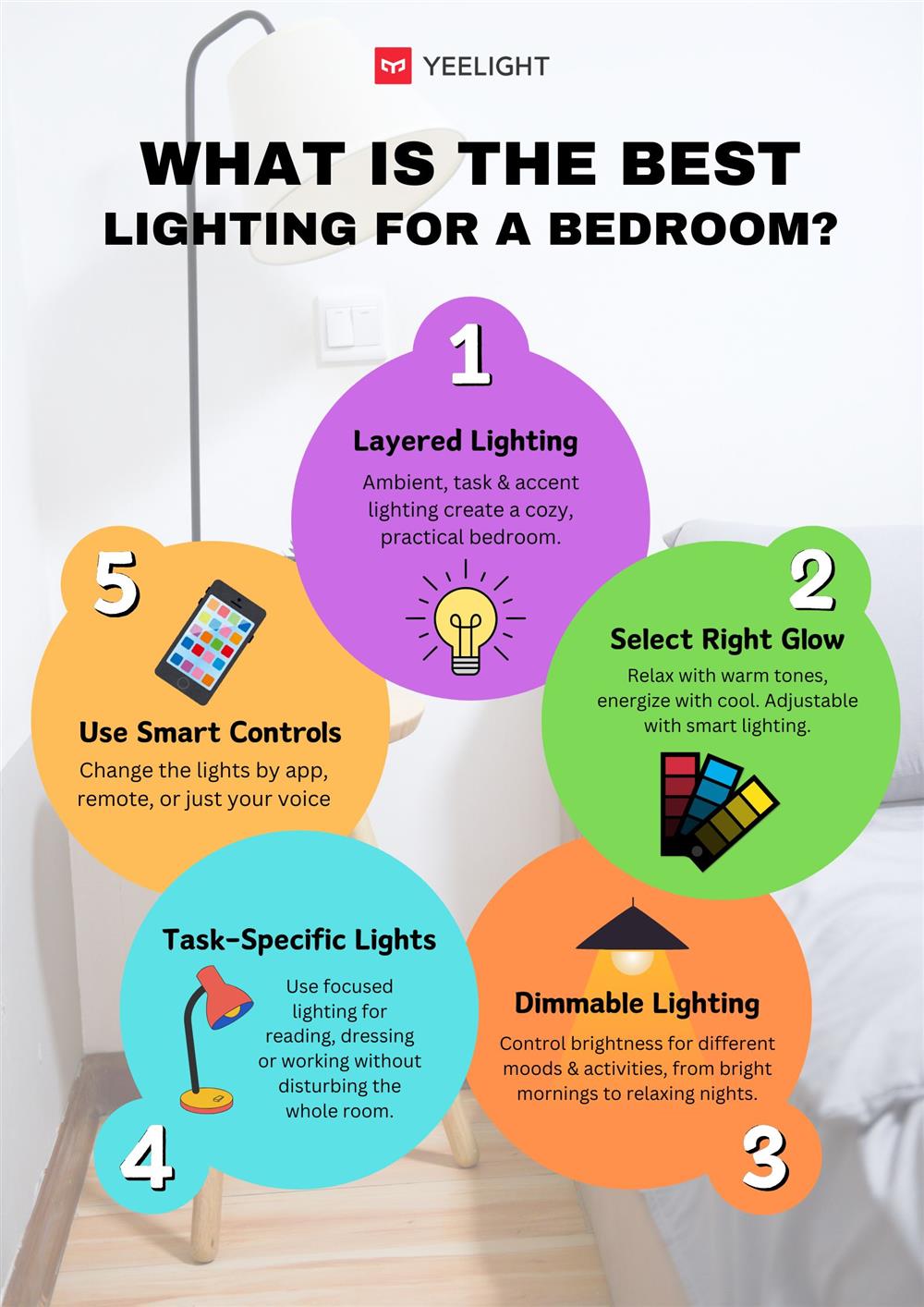
What Is The Best Lighting For A Bedroom?

When it comes to creating a comfortable and relaxing bedroom, lighting is often overlooked. Many people focus on the bed, curtains, or paint color, but the right lighting can completely change the mood and functionality of the room. A well-lit bedroom isn’t just about brightness; it’s about layering light to suit different needs, from winding down at night to getting ready in the morning.


Why It Matters

The bedroom is where you start and end your day. The right lighting can help you relax after a long day, create a cozy atmosphere, and even improve your sleep quality. At the same time, it should be functional enough to help with tasks like reading, dressing, or organizing your space.


1. Layer Your Lighting

A single ceiling light isn’t enough for a bedroom. Instead, combine ambient lighting (general illumination), task lighting (focused light for activities), and accent lighting (to create mood). For example, YEELIGHT Arwen Ceiling Lights can provide bright, adjustable ambient light, while bedside table lamps or wall-mounted reading lights serve as task lighting. You can then add YEELIGHT Smart Lightstrip behind your headboard for a warm accent glow at night.


2. Choose the Right Color Temperature

The color temperature of light affects the mood of your room. For bedrooms, warmer tones (around 2700K–3000K) are ideal for creating a cozy, relaxing environment. Cool white light (4000K and above) can feel too harsh and disrupt relaxation, especially before bedtime. With YEELIGHT Smart Bulbs, you can adjust the color temperature to warm tones at night and cooler tones in the morning to help you wake up naturally.


3. Go for Dimmable Lighting

Dimmable lights give you control over brightness, allowing you to adapt the lighting to your activities and mood. For example, you can keep it bright while folding laundry, then dim it for a soft glow before sleeping. Smart dimmable ceiling lights or bedside lamps can be adjusted via an app or voice assistant, making it effortless to change the brightness without getting out of bed.


4. Add Task-Specific Lights

Even in a bedroom, certain tasks require targeted lighting. A reading corner needs a focused floor lamp. A dressing area benefits from well-lit mirrors or cabinet lights that show true colors for clothing. YEELIGHT Cabinet Light is a great solution for wardrobes or vanity tables, providing just the right brightness without messy wiring.


5. Use Smart Controls for Convenience

Smart lighting adds an extra layer of comfort and efficiency to your bedroom. Imagine setting your lights to turn off automatically when you fall asleep, or having them gradually brighten in the morning to simulate sunrise. With YEELIGHT Pro smart ecosystem, you can control your lights using your phone, remote, or even voice commands, providing a stress-free lighting experience.


In conclusion, the best bedroom lighting is a combination of functionality and comfort. By layering lights, choosing the right color temperature, using dimmable options, adding task-specific lighting, and embracing smart controls, you can create a bedroom that looks beautiful, feels cozy, and works for your daily needs.

Ready to transform your bedroom lighting? 

Visit the YEELIGHT Malaysia page to explore the full range of smart lighting options, and schedule a visit to our Copper Connect showroom for a FREE consultation and LIVE demonstration!


What Is The Best Lighting For A Bedroom?