Close
You have no items in your shopping cart.
Search
RSS

Blog posts of '2026' 'August'

The Psychology of Lighting: How Light Affects Mood and Emotions

The Psychology of Lighting: How Light Affects Mood and Emotions

The Psychology of Lighting: How Light Affects Mood and Emotions

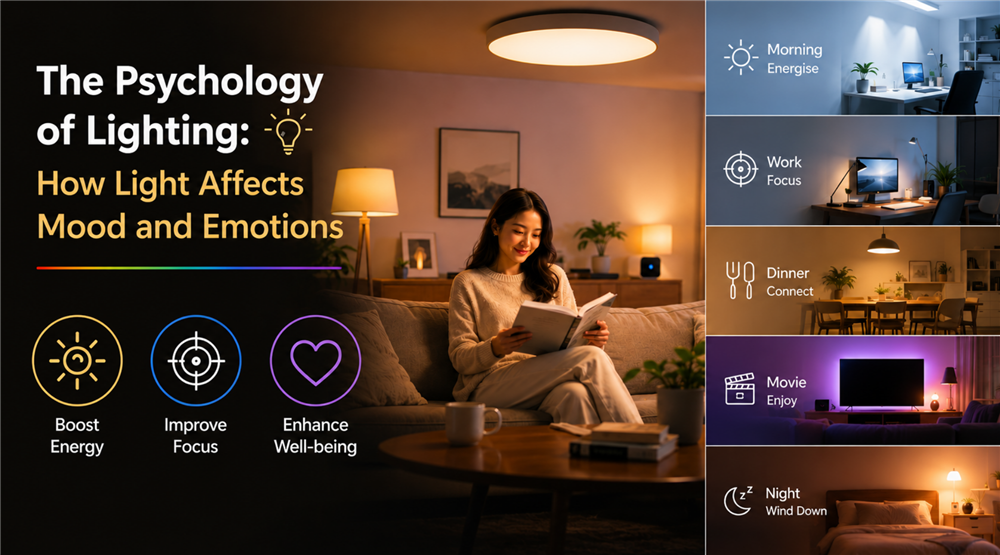
Lighting heavily affects the atmosphere of a room, thus it can change how a space feels. For instance, brighter and cooler lighting makes us feel more productive and supports focus, while warmer lighting creates a more relaxed atmosphere. In Malaysia, where most homes use the same space for multiple purposes, the right lighting can suit the mood for any activity there. 


1. Why does lighting affect how we feel?

Light is an important environmental signal to our brains. Light exposure helps to regulate the body’s circadian rhythm, an internal clock that runs on a 24-hour cycle and affects sleep and wakefulness. So the light around you can influence how awake, relaxed or ready for sleep you feel. Two different lighting brightness and color make up very different feelings.


2. Does warm lighting make a room feel more relaxing?

Warm lighting, which is around 2700K to 3000K, makes a room relaxing with a comfortable ambiance, making it suitable for rooms that are mainly for resting, such as bedrooms, living rooms or dining areas. While cooler lighting, which is around 4000K to 6500K supports productive areas such as the office.


3. Is cool white light better for productivity?

Cool and bright lighting makes a space more energetic and productive, which is best being used when doing work, studying or completing detailed tasks. For instance, a home office when doing work is best using cool lighting, but when it’s time to relax after work, warm lighting supports relaxation, which makes smart lighting flexible in this situation.


4. Can lighting affect sleep?

Yes. Lighting sends signals that regulate the body’s internal clock, which is why bright light at nights makes it difficult for the body to sleep. Thus, it is better to use dimmed warm lighting before sleeping for a better sleeping routine. Slowly reducing the brightness at night as bedtime approaches makes sleeping easier.


5. Can coloured lighting change the atmosphere of a room?

Yes, coloured lighting makes the visual mood of the space change dramatically. Colourful RGB lighting, which is always known as gaming lighting makes the room more playful for gaming, movie nights or celebrations such as birthday parties. They are best used to add colour to the room, not used as the main lighting as they cannot lit the room properly.


Why Psychology of Lighting Matters

Malaysia’s climate allows a lot of natural sunlight during the day, but our indoor lifestyle also continues after the sun has already set. Thus, the home needs to suit different activities at night, such as working, studying or even watching movies.

  • Multi-purpose rooms: In Malaysia, the dining table is often used as a space to eat, or doing work when working-from-home. Thus, it is important to have smart lighting to suit different activities, which is warm lighting for eating, and cool lighting for working.
  • Evening Gatherings: Malaysians often spend their evening gathering with family and friends. Thus, warm lighting can be used to create a welcoming atmosphere for having a conversation and meals. 
  • Heavy Rain: Rainy days and dark skies make the indoors of your home significantly dark, thus having lighting that can have their brightness adjusted to your needs can be flexible without making the indoors too bright.

Real-Life Use Cases

  • From Working to Relaxing Mode: After working with cool lighting to stay productive at your dining table, you can easily set them to warm lighting with smart lighting when you’re about to have lunch or dinner for a more relaxing mood.
  • Create a Cozy Bedroom: Instead of using the same white lighting when you wake up or during bedtime, use dimmed warm lighting in the evening to have a softer lighting to make the bedroom more comfortable for sleeping.
  • Setting the Mood for Movie Nights: Making the room completely dark during movie nights can strain the eyes, thus having low brightness ambient lighting near the TV or around the room can create balanced lighting that is comfortable for the eyes.

Tips & Best Practices

  • Match Lighting With Activity: Know what you do in every space in your home. For instance, you may use the kitchen as a cooking and dining area. Thus having lighting that can adjust from white to warm lighting makes it suitable for both activities.
  • Layer Your Lights: By layering different lighting types, such as task, ambient, and accent lighting, you can create a more balanced space that is cozier by reducing harsh shadows, making it comfortable for the eyes. 

Common Mistakes

  • Using The Brightest Lighting All The Time: Using the maximum brightness lighting from morning until night can make the room uncomfortable and harsh at night. Instead, you can adjust the brightness and colour based on the activity you’re doing.
  • Choosing Lighting Based on Appearance: Good lighting is not only about the design. Brightness, colour temperature, automation features, and room usage affect the overall lighting experience, thus picking the one that is most suitable for your space is important.


The Yeelight Advantage

Modern smart lighting brands such as Yeelight offer a wide range of lighting solutions that can help your home adapt to your mood. From warm, relaxing lighting for quiet evenings to brighter, cooler settings for work and focus, you can create different atmospheres without changing your home's setup.

Yeelight Smart Lighting gives homeowners the flexibility to personalise their lighting through adjustable brightness, colour temperature and smart scenes. Whether you want your living room to feel cosy after a long day or create a more vibrant atmosphere for movie night, the right lighting can help your space feel the way you want it to.


Smart Lighting vs Normal Lighting: Which Is Better for Your Mood?

 Features

Normal Lighting

Smart Lighting

Mood flexibility

Usually stays at one colour and brightness.

Adjust brightness, colour temperature and colour on supported models.

Relaxation

Requires manually changing or switching lights.

Create a warm, dim setting for relaxing.

Focus

Usually uses the same light throughout the day.

Switch to a brighter, cooler setting for work or study.

Entertainment

Atmosphere depends mainly on your existing fixtures.

Create colourful or dim ambient scenes for movies, gaming or gatherings.

Night-time routine

Lights are usually switched on or off manually.

Schedule lights to gradually change or turn off at set times.


How to Get Started With Mood-Based Lighting

1. Start With One Room: Choose one room where you spend a lot of time, such as your bedroom, living room, study or dining area. Starting with one space makes it easier to experiment with different brightness levels and colour temperatures.

2. Identify the Moods You Want: Think about how you want the room to feel at different times of the day. This gives you a clearer idea of the lighting settings you actually need instead of choosing colours simply because they look good.

3.Choose the Right Colour Temperature:

  • 2700K–3000K: Warm and cosy, suitable for relaxing, dining and bedrooms.

  • 3500K–4000K: Neutral and balanced: suitable for kitchens, living areas and everyday activities.

  • 5000K–6500K: Cool and bright, suitable for focused tasks such as studying or working.

4. Adjust Brightness, Not Just Colour: Brightness has an equal effect on how a space feels. Keeping your lights bright when you need to concentrate and gradually lowering the brightness when you want to relax. 

5. Create Different Lighting Scenes:

  • Work Mode: Clear and bright lighting designed to make your workspace feel focused.
  • Dinner Mode: Warm and soft lighting to create a relaxed atmosphere for dining.
  • Movie Mode: Dim ambient lighting or subtle colours to add atmosphere without making the room completely dark.

6. Expand to Other Rooms: Once you find a setup that works, apply the same approach to other areas of your home. You could create a calming bedroom, a focused study room, a welcoming dining area and a more immersive entertainment space — all without changing the basic layout of your home.


Final Thoughts

The psychology of lighting means there is no one perfect color or brightness for all. It’s more about understanding how light works with your routine and choosing lighting that supports how you actually live. Smart lighting means your home doesn’t have to look the same at 8am or 10pm.


Ready to Upgrade Your Home?

Explore smart lighting solutions or get a Free Lighting Proposal Plan tailored to your home setup by scheduling a visit to the Copper Connect showroom! Our lighting experts will guide you in designing the perfect smart lighting setup that fits your home perfectly.

Smart Lighting for Renters: What Are Your Options?

Smart Lighting for Renters: What Are Your Options?

Smart Lighting for Renters: What Are Your Options?

Having smart lighting can help renters enjoy lighting customization without making permanent changes to the homes they are renting. Smart lighting fixtures like smart bulbs and smart light strips, or portable smart desk lamps are plug-and-play, making them perfect for renters who want to improve ambience and convenience without major renovation or wiring.


1. What Smart Light Options are Best for Renters?

The best options would be smart lighting that are plug-and-play, such as smart bulbs, smart lightstrips, desk lamps, or portable smart lights. They are convenient, as they can be installed without any renovation or hacking the walls. For instance, a normal bulb can be replaced with a smart bulb without permanent installation, making it easy to bring when moving homes.


2. Do Smart Lights Need Wiring?

Not all smart lights need renovation or wiring changes. Some smart lights are plug-and-play like smart bulbs or smart light strips, which can be installed by ourselves. But advanced home lighting automation systems usually require wiring and installation by professionals because they work through a hub.


3. Can I Install Smart Lights Without Drilling?

Yes. Many smart light options like smart bulbs and Smart LED Light Strips require no wiring or drilling, making them renter-friendly. They can simply replace existing lighting in an instant without any professionals. 


4. What Smart Lights Can I Take to My Next Rental?

Almost any portable or plug-and-play smart light can move with you. The key is to choose products based on portability and minimal permanent installation, rather than focusing only on the number of smart features. Smart bulbs can be removed from one fitting and installed in another compatible fitting, while portable desk lamps and ambient lamps can simply be packed and moved.


5. Are Smart Lights Worth It for Renters?

Yes, especially when they spend most of their time at home. Instead of spending on decorations such as furniture that would be difficult to move when changing homes, smart lighting is small and can improve the space significantly while helping enhance daily routine.


6. Can Smart Lighting Help Save Electricity?

Yes, compared to traditional lighting. Smart lighting lowers unnecessary electricity usage but it does not guarantee lower electricity bills. Features such as scheduling and automation can help prevent lights from being left on unnecessarily.


Using Smart Lighting for Renters

In Malaysian cities, you will increasingly find renting is more common, especially among students, young professionals, couples and people living in condos or apartments. Many rental homes already come with basic lighting, but that does not always mean the lighting suits how you actually use the space. Smart lighting offers a way to personalise your home without turning a rental property into a renovation project. 

Why Smart Lighting for Renters Matters

  • Flexible lighting: Rented rooms, studio apartments or condominiums are often small spaces, so they have a limited floor and wall space. Thus, desk lamps, light strips or smart bulbs can add a lighting layer without taking up too much room.
  • Avoid unnecessary renovation: Not all rental homes allow wiring and renovations, thus plug-and-play smart lights give renters a simple way to upgrade their space with smart lighting that are not permanent.
  • Bring your setup with you: When tenancy ends, you can bring along your smart lights, such as smart bulbs, smart desk lamps, or smart light strips with you to your new home as they are portable and not permanently installed.

Real-Life Use Cases

  • Turning a Bedroom into a Relaxing Space: Just using a ceiling light in your bedroom can feel too bright and make the room look dull, especially when you want to rest. Lighting that can be dimmed and changes colours to suit the mood provide better illumination.
  • Creating a Better Work-From-Home Setup: Many Malaysians use their room or the living room as a workspace, as they don’t have enough space for a dedicated office. Thus, a smart desk lamp that can change colours can provide focused lighting when working and softer ambient lighting outside of working hours.
  • Making a Home Feel More Personal: Rental spaces like rented homes or rooms can feel too generic as you can’t change the furniture or paint the walls. Thus to make them more personalized, adding smart lighting around the room can add personality without a major makeover.

Tips & Best Practices

  • Start with the lights you use most: Start with only smart lights in the part of your rental home you use the most, like your bedroom or living room. Make sure the smart light can solve your problem; don’t put them in for the sake of it.
  • Focus on Compatibility and Portability: Before you buy, make sure to check the bulb fitting, voltage, Wi-Fi requirements and compatibility with your existing fixture. If you anticipate moving within the next few years, select products that are easy to remove and reuse. 

Common Mistakes

  • Installing Permanent Fixtures Without Permission: Replacing the ceiling lights, wall switches or any fixtures that need changes in wiring components that involve electrical work could affect the tenancy agreement. Always double-check with the landlord.
  • Choosing Features You Will Never Use: Smart lights have a lot of features such as colourful lighting effects and advanced automation. However, it is important to prioritise lights that have practical features that you will be using instead.


The Yeelight Advantage

Modern smart lighting brands such as Yeelight have a wide range of solutions for your home. Designed to fit seamlessly into smart home ecosystems, these products are perfect for Malaysian homeowners who value function and design.

Yeelight Smart Lighting has become a leader in the Malaysian market because of its integration with Xiaomi Home, Google Home, and Apple HomeKit. Their "SLISAON" (Smart Light Is Always ON) ensures your smart scenes work even if someone flips the manual wall switch. 


Comparison: Plug-and-Play vs Wired Smart Lighting

Feature

Plug-and-Play Smart Lighting

Wired Smart Lighting

Installation

Easy to install, with many products requiring only a bulb replacement or simple placement.

Usually requires professional installation, especially for ceiling lights and smart switches.

Wiring Changes

No major wiring changes are needed.

Requires changes to the existing electrical wiring or switches.

Portability

Highly portable and easy to take with you when you move to another home.

Less portable because the products are integrated into the property's electrical system.

When Wi-Fi Is Down

App-based smart features and remote control may be unavailable.

The physical light switch can still control the light.

Customisation

Offers flexible control such as brightness, colour temperature, schedules, and lighting scenes, depending on the product.

Offer extensive customisation and whole-home control, especially when multiple wired lights and switches are connected.


How to Get Started With Smart Lighting as a Renter

1. Identify Your Lighting Problem: Know what you want to improve in your home. Is your bedroom too bright at night? Is your desk poorly lit? Does your living room feel too plain? When you know the problem, it is easier to choose the right lighting.

2. Choose the Least Permanent Solution: Most rental spaces cannot be modified, thus choose plug-and-play smart lights such as smart bulbs, smart desk lamps or smart light strips. They allow you to have smart lights without any major wiring or renovation.

3. Check Compatibility: For smart bulbs, ensure the existing socket can fit them. For Wi-Fi products, ensure your internet connection meets the product requirements. If you are already using a specific smart home system, make sure they are compatible.

4. Start With One Room: The home does not need a complete setup in one day. Identify the smart lights needed one-by-one for your most used space after experiencing them. This lets you know which smart lighting fixture would be the most useful to you.

5. Create Simple Lighting Routines: Try simple routines that can improve your daily routine, such as scheduling lights to dim in the evening, and adjusting the brightness of the lighting when doing work.


Final Thoughts

Renting doesn’t mean you have to settle for basic lighting. The right smart lighting that’s renter-friendly can turn a bedroom into a more relaxing space, a better work-from-home environment, or a small Malaysian condo into a more personable one without signing up for a major renovation. The best way to attack is to start small.


Ready to Upgrade Your Home?

Explore smart lighting solutions or get a Free Lighting Proposal Plan tailored to your home setup by scheduling a visit to the Copper Connect showroom! Our lighting experts will guide you in designing the perfect smart lighting setup that fits your home perfectly.

How Much Electricity Can Smart Lighting Save?

How Much Electricity Can Smart Lighting Save?

How Much Electricity Can Smart Lighting Save?

Reducing unnecessary energy usage, improving lighting efficiency and having better control over your lighting is what smart lighting can help with. While electricity savings heavily depend on your habits, home size and lighting setup, using LED lights with smart lighting control such as scheduling, dimming and motion sensor can make your lighting more efficient.


1. How much electricity can smart lighting save?

It depends on your lighting habits and the smart lighting system you use. Smart LED lights use less electricity in general compared to incandescent lights. Along with the automation features, they prevent lights from being turned on when unnecessary. For instance, motion sensors can automatically turn off the lights when no motion is detected.


2. Is smart lighting expensive compared to renovation?

Generally, smart lighting is more affordable than a full renovation. Changing the flooring, cabinets and furniture can be very expensive, but just upgrading key areas of the lights can create a more significant visual improvement. A lot of smart lights are easy to install such as smart bulbs or smart lightstrips, making them suitable for simple upgrades.


3. Can smart lighting reduce my electricity bill in Malaysia?

Yes, especially when combined with more energy-saving habits such as unplugging electronic devices when not used. In Malaysia, air conditioning and electronic appliances already contribute to high electricity consumption, thus reducing lighting usage results in better home efficiency.


4. Do smart lights consume electricity when they are switched off?

Yes, but a very small amount that goes unnoticed on bills. The small amount is used for standby power. Smart lights use a small amount of standby power when connected to Wi-Fi or a smart system. However, they are very low compared to leaving energy wasted from leaving the lights on unused.


5. Which smart lighting features help save electricity?

The most useful energy-saving features are:

  • Scheduling: Set a time to turn on or off your lights based on your routine.
  • Dimming: Reduce the brightness of your lights when bright light is unnecessary.
  • Motion Sensor: Turn off lights when no motion is detected.
  • Remote Control: Switch off lights using an app on the phone away from home.


Using Smart Lighting to Save Electricity

More and more homeowners in Malaysia are becoming more aware of the importance of saving electricity, as it impacts their monthly bills. Lighting may not be the biggest contributor to the monthly expenses, but bad lighting habits adds unnecessary usage over time. Smart lighting helps homeowners create a more energy-conscious home by making everyday lighting decisions easier and more automation.

Why Smart Lighting Matters in Saving Electricity

  • Higher electricity awareness: A lot of Malaysian homeowners are now more aware of their electricity usage and putting effort to reduce unnecessary usage while maintaining a comfortable home environment.
  • Lights switched on without using: It is common to accidentally leave the lights turned on when leaving a room at home, even when they are not being used. Thus, smart controls such as remote control or motion sensors help reduce lights switched on unnecessarily.
  • Multifunctional rooms: Nowadays, one room is often used for different purposes, such as watching TV, reading, or doing work. Thus, smart lighting can be adjusted to different needs without using too much energy than needed.

Real-life Use Cases

  • Automatically turn off lights when no one is home: People often accidentally leave lights turned on when they are in a rush to leave home, thus with smart lighting, the lights can be turned off using the app in your phone even when you’re away from home.
  • Adjusting brightness based on activity: Different activities need different brightness levels. For instance, watching television only requires dimmed ambient lighting, but doing work needs bright focused lighting to stay productive. Using the adjustable brightness feature creates a comfortable environment while using less electricity.
  • Set up lighting routines: Set your smart lighting to be adjusted according to your daily lifestyle. For example, scheduling them to slowly brighten up at 7am to wake up, and gradually turn off at 10pm to signal the brain to sleep.

Tips & Best Practices

  • Schedule lights based on your routine: Set your smart lights to follow your routine, like turning off the lights at 8am when you leave for work, or reduce brightness and set the light to a warm temperature at 10pm before sleeping. This reduces the need for manual adjustments.
  • Choose the right brightness for each space: Different areas of your home require different lighting levels. Using bright lighting only where needed and softer lighting in relaxation areas can improve comfort while reducing energy consumption.

Common Mistakes To Avoid

  • Not fully utilizing its features: Some people buy and use a smart bulb, just to use it like a normal bulb. Without using its features of scheduling, adjusting brightness and colour, and using scenes, they are missing out to save energy.
  • Choosing the brightest light: Bright lighting isn’t always the best choice. They may illuminate the entire room, but it can create an uncomfortable environment, especially at resting areas such as the bedroom or living room.


The Yeelight Advantage

Modern smart lighting brands such as Yeelight have a wide range of solutions for your home. Designed to fit seamlessly into smart home ecosystems, these products are perfect for Malaysian homeowners who value function and design.

Yeelight Smart Lighting has become a leader in the Malaysian market because of its integration with Xiaomi Home, Google Home, and Apple HomeKit. Their "SLISAON" (Smart Light Is Always ON) ensures your smart scenes work even if someone flips the manual wall switch. 


Comparison: Traditional Lighting vs Smart Lighting

Category

Traditional Lighting

Smart Lighting

Control

Relies on physical switches, making it easier to leave lights on unnecessarily.

Uses schedules, timers, and remote control to reduce wasted electricity.

Brightness

Often stays at full brightness regardless of the activity.

Dimming adjusts light output, helping lower electricity consumption.

Automation

No automatic way to turn lights off when not needed.

Automatically switches lights on or off based on routines or occupancy.

Efficiency

Savings depend mainly on using LED bulbs.

Combines LED efficiency with smart features to maximise energy savings.

Savings

Reduces electricity use only through efficient bulbs and user habits.

Helps save more electricity by combining efficient LEDs with smart controls and automation.


How to Get Started with Smart Lighting To Save Electricity

1. Identify the area that needs lighting the most: Evaluate which room often needs lighting, for instance the kitchen, living room or bedroom. These areas have the opportunity to be upgraded to improve energy efficiency through smart lighting.

2. Set up schedules and automation: Create a lighting schedule that matches your daily lifestyle, like turning off all the lights at 8am every weekday since you leave the house for work at that time, or dim the light at 6pm to create a relaxing mood at home after work. This prevents unnecessary electricity usage.

3. Adjust lighting brightness: Adjust the brightness of the lights on how the space is used. For instance, a living room does not need a maximum brightness as it is an area to rest and watch TV. This creates a relaxing environment, at the same time, reduces energy consumption.

4. Use smart lighting at other areas of the home: Once understanding the benefits of smart lighting, add more of them to other parts of your home. Over time, you can build a connected smart lighting system throughout the home while saving more energy.


Final Thoughts

Smart lighting isn’t all about installing technology in your home. It is about making smarter electricity use in everyday life, with more comfort and convenience. For Malaysian homeowners, small changes such as automating lights, adjusting brightness, and choosing energy-efficient LED solutions can make a meaningful difference in the long run.


Ready to Upgrade Your Home?

Explore smart lighting solutions or get a Free Lighting Proposal Plan tailored to your home setup by scheduling a visit to the Copper Connect showroom! Our lighting experts will guide you in designing the perfect smart lighting setup that fits your home perfectly.